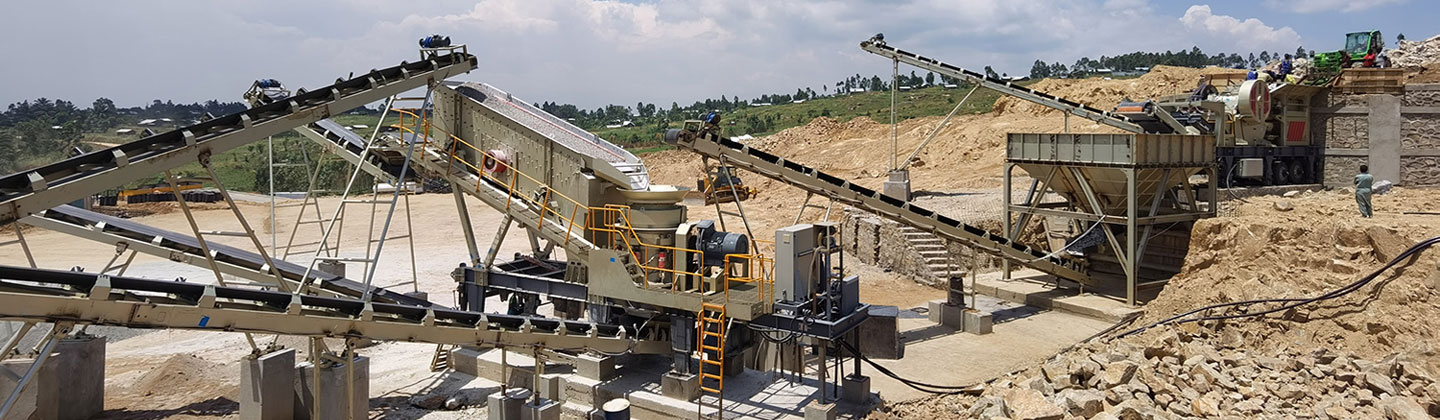
Stone crushing plants play a crucial role in aggregate production, mining, and construction industries. Among different crushing configurations, two-stage crushing plants offer an efficient balance between capital investment and production capacity. This article explores the design principles, equipment selection, and operational considerations for setting up an effective two-stage stone crushing plant.
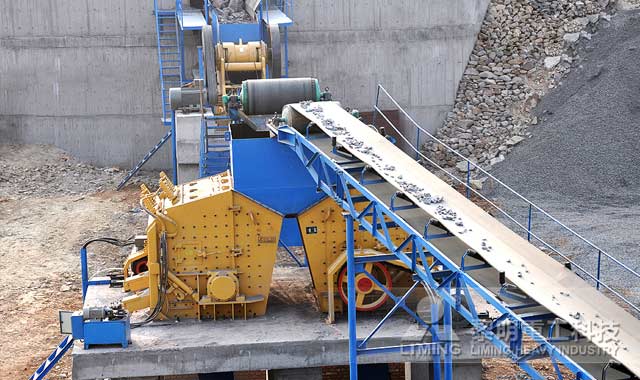
1. What Is Two-Stage Crushing?
A two-stage crushing plant typically consists of:
- Primary crushing (coarse crushing): Reduces large stones (up to 1,000 mm) to medium-sized rocks (100–350 mm).
- Secondary crushing (medium/fine crushing): Further processes the material into smaller aggregates (20–50 mm).
Compared to single-stage crushing, this setup improves particle shape, reduces wear on equipment, and enhances overall efficiency.
2. Equipment Selection for Two-Stage Crushing
Primary Crushing Stage:
- Jaw Crusher: Strong and reliable for hard rocks like granite and basalt. Handles large feed sizes (up to 1,500 mm).
- Gyratory Crusher: Suitable for high-capacity operations (over 1,000 TPH), often seen in mining applications.
Secondary Crushing Stage:
- Cone Crusher: Ideal for abrasive and hard materials (granite, basalt, river pebbles). Provides uniform output with low flakiness.
- Impact Crusher: Best for medium-hard rocks (limestone, dolomite). Offers better particle shape adjustment and high reduction ratios.
- Hammer Crusher: Used for softer stones but may produce more fines (<5 mm). Less wear-resistant than cone or impact crushers.
3. Key Design Considerations
- Feed size & hardness: Determines crusher selection (e.g., jaw crusher for large granite vs. impact crusher for limestone).
- Desired output size: Cone crushers offer finer control (20–50 mm), while impact crushers are better for 10–30 mm aggregates.
- Production capacity: Matching crushers ensures smooth material flow (e.g., 200–500 TPH plants).
- Plant layout: Minimize material transfer points to reduce energy consumption and dust generation.
4. Advantages of Two-Stage Crushing
- Higher efficiency: Balanced load distribution between crushers reduces bottlenecks.
- Better particle shape: Secondary crushing improves cubical aggregates for concrete/asphalt.
- Lower operating costs: Reduced wear on secondary crushers compared to single-stage setups.
5. Typical Applications
- Aggregate production: Road base, concrete sand.
- Mining operations: Pre-processing ore before grinding.
- Construction waste recycling: Crushing demolished concrete for reuse.
A well-designed two-stage crushing plant optimizes production efficiency, reduces downtime, and extends equipment lifespan. Proper selection of primary and secondary crushers—based on material hardness, feed size, and output requirements—ensures profitability and sustainability.
For customized solutions (e.g., granite vs. limestone crushing), consulting with crusher manufacturers ensures optimal plant configuration.