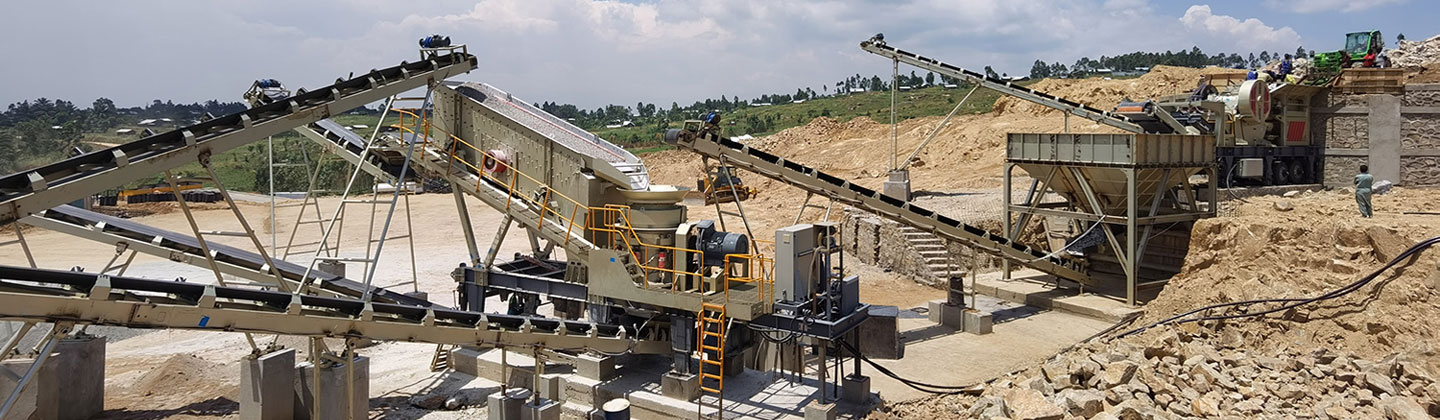
Granite is one of the most widely used materials in construction and infrastructure projects due to its durability, hardness, and aesthetic appeal. However, processing granite into high-quality sand requires specialized crushing equipment—enter the Aggregate Cone Crusher, a cornerstone machine in granite sand production.
Why Use a Cone Crusher for Granite Sand Making?
Granite is a hard and abrasive rock, making traditional jaw crushers or impact crushers less efficient for secondary or tertiary crushing stages. Cone crushers excel in handling granite’s compressive strength (typically between 100-300 MPa) while producing uniformly shaped aggregates suitable for sand production.
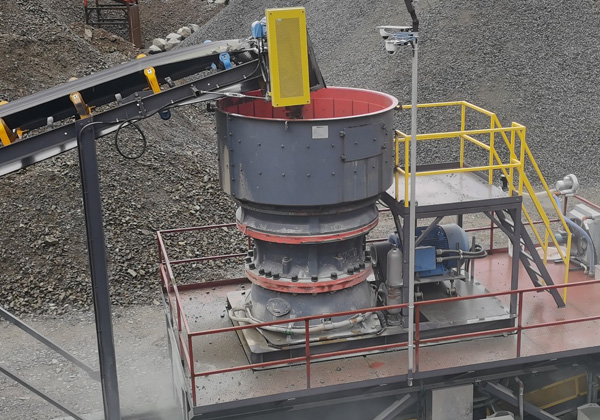
How Aggregate Cone Crushers Work
Aggregate cone crushers operate by compressing granite between a mantle and concave liner within a crushing chamber. The process involves:
- Feed Entry: Granite rocks enter the top of the crusher through a feed hopper.
- Crushing Action: The eccentric gyratory motion of the mantle crushes the material against the stationary concave liner.
- Particle Size Control: Adjustable settings determine the final product size, ensuring consistency in sand and aggregate output.
- Discharge: Crushed granite exits through the bottom discharge opening, ready for further screening or processing.
Modern cone crushers, such as Nordberg® HPe™ series, incorporate advanced automation (e.g., IC70C & MCP systems) for real-time monitoring and precision control, enhancing efficiency and reducing downtime.
Advantages of Using Cone Crushers for Granite Sand Making
- High Crushing Efficiency: Cone crushers maximize production output while minimizing energy consumption.
- Superior Particle Shape: They produce well-shaped, cubical sand particles ideal for concrete and asphalt mixes.
- Automation & Precision: Sensors and smart technology optimize performance, ensuring consistent gradation.
- Low Wear & Longevity: Robust materials (e.g., manganese steel liners) withstand granite’s abrasiveness.
- Adaptability: Can be integrated into fixed or mobile crushing plants for flexible operations.
Choosing the Right Cone Crusher
When selecting a cone crusher for granite sand making, consider:
- Capacity Needs: Match crusher size to required tonnage (e.g., HP600e for mid-sized operations, HP900e for large-scale production).
- Closed-Side Setting (CSS): Adjusts output size—critical for meeting sand specifications.
- Automation Features: Ensure compatibility with plant control systems.
- Wear Parts & Maintenance: Opt for easily replaceable components to minimize downtime.
Key Considerations for Optimal Performance
✔ Proper Feed Size & Distribution
Ensuring granite chunks are within the crusher’s recommended feed size prevents choke-ups and maximizes throughput.
✔ Regular Maintenance
Inspecting wear parts (mantle, concave, bearings), lubricating components, and monitoring hydraulic pressures prolong crusher lifespan.
✔ Downstream Screening & Grading
Pairing cone crushers with vibrating screens ensures precise particle classification for high-quality sand production.
✔ Balanced Circuit Design
Optimizing the crushing plant layout—such as pairing cone crushers with jaw crushers for primary crushing—boosts efficiency.
For optimal results, consult manufacturers to tailor crusher specifications to your granite sand-making needs.