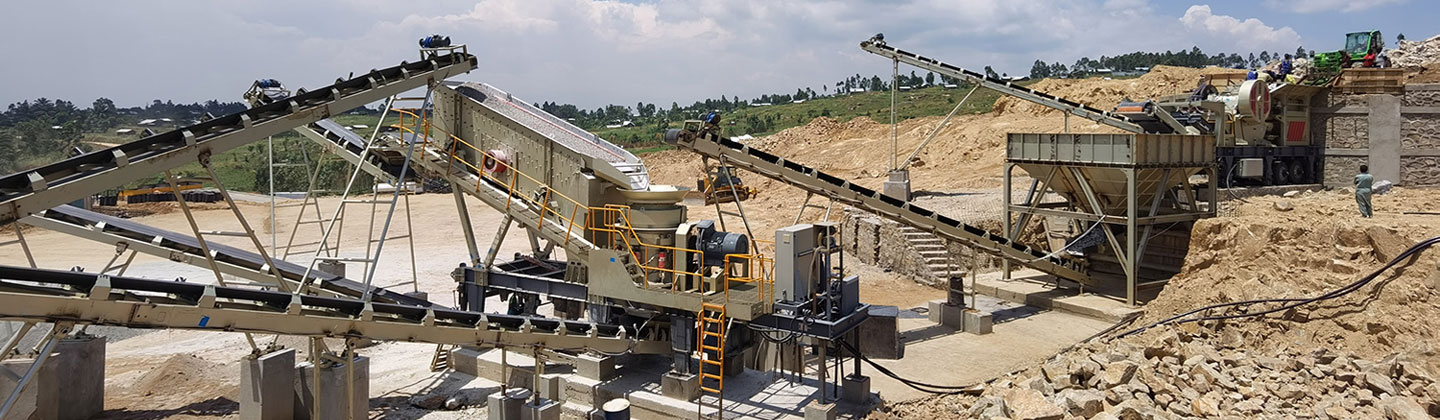
Granite crushed stone is one of the most widely used construction aggregates in the world. Owing to its excellent physical and mechanical properties, granite aggregate plays a vital role in infrastructure construction, building engineering, transportation, and industrial applications. This article explores the key use values of granite crushed stone from performance, application fields, and economic perspectives.
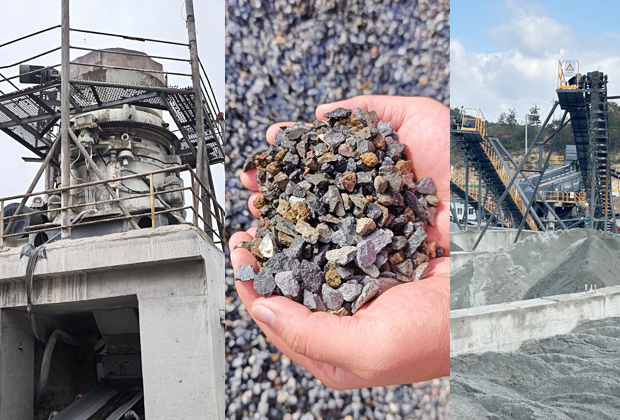
Superior Physical and Mechanical Properties
Granite is an igneous rock formed from magma deep within the Earth’s crust. Its crystalline structure gives it several outstanding advantages after crushing:
-
High compressive strength: Granite crushed stone can withstand heavy loads, making it ideal for structural and load-bearing applications.
-
Excellent hardness and wear resistance: It performs well under long-term abrasion, especially in high-traffic areas such as roads and railways.
-
Low water absorption: This property improves durability and resistance to freeze–thaw cycles.
-
Good chemical stability: Granite aggregate resists weathering and chemical corrosion, ensuring long service life.
These characteristics make granite crushed stone a high-quality aggregate compared with many sedimentary rock alternatives.
Use Value in Construction Engineering
In the construction industry, granite crushed stone is an indispensable basic material:
-
Concrete aggregate: It is widely used as coarse aggregate in ordinary concrete, high-strength concrete, and reinforced concrete, improving compressive strength and durability.
-
Building foundations: Due to its stability and load-bearing capacity, granite aggregate is commonly used in foundations for residential, commercial, and industrial buildings.
-
Prefabricated components: Granite crushed stone is also used in precast beams, slabs, pipes, and other concrete products.
Its reliability directly enhances the safety and longevity of building structures.
Use Value in Road and Transportation Infrastructure
Granite crushed stone plays a crucial role in transportation construction:
-
Road base and sub-base: Its high strength and interlocking properties provide a stable foundation for highways and urban roads.
-
Asphalt pavement aggregate: Granite aggregate offers good skid resistance and durability, improving driving safety and pavement lifespan.
-
Railway ballast: Crushed granite is often used as railway ballast to ensure track stability and effective load distribution.
In these applications, granite crushed stone contributes directly to reduced maintenance costs and improved operational safety.
Economic and Environmental Value
From an economic standpoint, granite crushed stone offers long-term benefits:
-
High cost-effectiveness: Although granite is hard to crush, its durability reduces replacement and maintenance costs over time.
-
Wide availability: Granite resources are abundant in many regions, supporting stable supply chains.
-
Recyclability: Crushed granite from demolished concrete and old pavements can be recycled, aligning with sustainable construction practices.
Its long service life and recyclability make granite crushed stone an important material in green and sustainable development.
The use value of granite crushed stone lies in its excellent strength, durability, and versatility. From concrete production and road construction to municipal engineering and landscaping, granite aggregate provides reliable performance and long-term economic benefits. As infrastructure construction and sustainable development continue to advance, granite crushed stone will remain a core material supporting modern engineering and urban development.