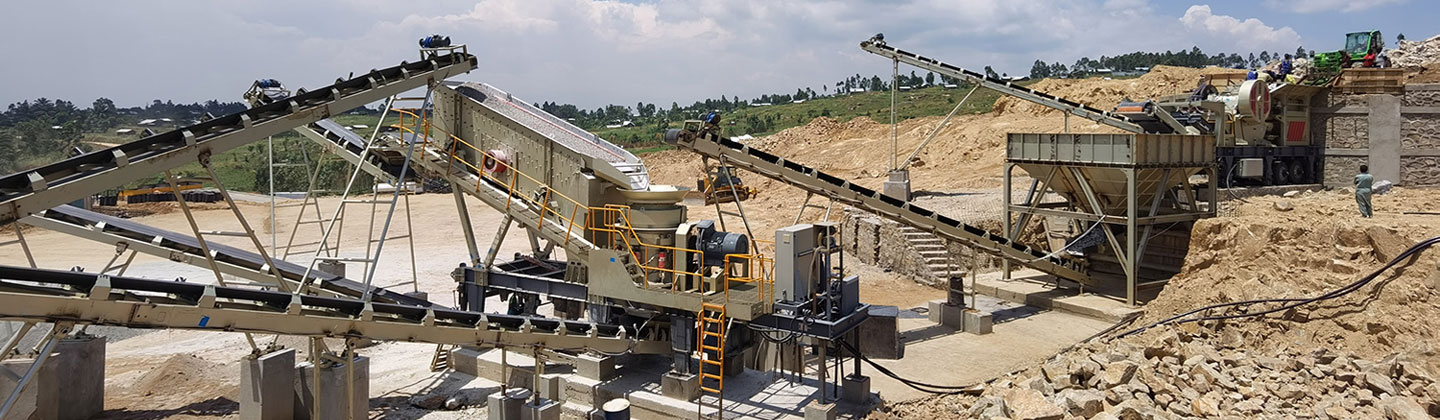
In modern aggregate and mineral-processing plants, a material sorting vibrating screen is more than a device for separating particles by size. It is a critical control point between crushing, classification, conveying, and stockpiling. Its performance determines whether individual product fractions meet specification, whether crushers operate efficiently, and whether final stockpiles receive a stable, correctly proportioned flow of material.
Advanced vibrating screens, including designs such as the S5X series, address these requirements through a combination of optimized vibration, carefully engineered screen-deck geometry, adjustable inclination, and modular screening media. The objective is to maximize stratification and screening efficiency while minimizing pegging, blinding, and uneven material distribution across the deck.
Multi-Deck Cut-Size Precision
Multi-deck screening allows one machine to produce several size fractions in a single classification stage. The upper deck removes oversize material, while progressively finer lower decks separate intermediate and fine fractions. Maintaining accurate cut sizes requires more than selecting the correct aperture. Particle presentation, residence time, vibration intensity, and bed depth all influence the probability that material passes through the correct opening.
A well-designed vibrating screen maintains controlled particle movement across every deck. Excessive acceleration can propel particles too quickly across the surface, reducing the opportunity for undersize material to pass through. Insufficient motion can produce a deep material bed, increasing carryover and reducing separation efficiency. Optimized stroke amplitude and vibration frequency therefore provide a balance between transport capacity and screening probability.
This becomes particularly important when several commercial products are generated simultaneously. A small error in one deck’s separation can contaminate downstream fractions, causing off-specification aggregate and inefficient rehandling.
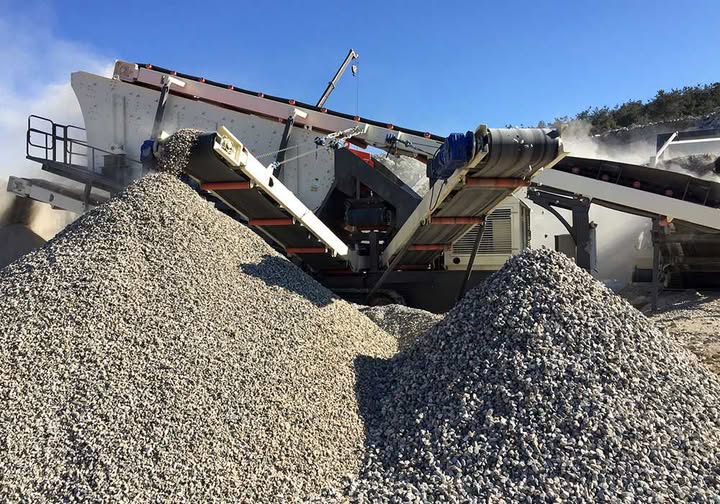
Screen Deck Geometry and Material Flow
Deck geometry directly affects how material spreads and stratifies. The inclination angle influences both the velocity of material travelling along the screen and the depth of the material bed. A steeper deck generally promotes faster transport, which can increase capacity but reduce residence time. A shallower configuration increases screening exposure but may restrict throughput if material accumulates excessively.
Advanced screen designs use optimized deck geometry to maintain a controlled balance between these effects. Feed distribution is equally important. If material enters predominantly on one side of a deck, that section can become overloaded while the opposite side remains underutilized. Uneven loading reduces effective screening area and can create inconsistent cut sizes.
The ideal flow pattern is therefore broad, stable, and evenly distributed from feed end to discharge. This allows each deck to operate closer to its designed loading condition while helping downstream conveyors and stockpiles receive predictable material rates.
Preventing Deck Pegging
Pegging occurs when particles become lodged in screen openings, progressively reducing the available screening area. It is particularly problematic when elongated, near-size, or irregularly shaped aggregate repeatedly encounters apertures close to its own dimensions.
Vibration parameters play an important role in controlling this problem. Appropriate stroke amplitude creates sufficient particle agitation to encourage material to release from the deck while maintaining effective forward transport. The combination of amplitude, frequency, and inclination can also improve stratification, allowing finer particles to migrate toward the screen surface rather than remaining buried beneath coarse material.
Screen-media selection provides another line of defense. Woven-wire mesh offers precise, well-defined apertures and is widely used where accurate sizing is the primary requirement. However, it can be vulnerable to blinding and wear under demanding conditions.
Polyurethane modular panels provide an alternative where durability, impact resistance, and reduced pegging or blinding are priorities. Their flexible construction can help release trapped particles and maintain open screening area. Because panels can be replaced individually, modular media also simplifies maintenance and allows different aperture configurations to be combined across decks.
Balancing the Complete Processing Circuit
Screen efficiency cannot be considered independently from the crushers and conveyors feeding it. If a primary crusher produces material faster than the screening circuit can classify it, excessive bed depth develops and separation accuracy declines. Conversely, underfeeding wastes installed screening capacity and can destabilize downstream stockpile production.
The vibrating screen therefore acts as a flow-balancing component between crushing and final product handling. Correctly matched screen capacity allows primary and secondary crushers to operate within their intended ranges while ensuring that each finished product receives a consistent feed rate.
For aggregate producers, this translates into more predictable stockpile inventories, fewer recirculating loads, and better control of product specifications. In mineral-classification circuits, accurate fractional separation can similarly improve downstream recovery and reduce unnecessary processing of incorrectly sized material.
Ultimately, the performance of a material sorting vibrating screen depends on the interaction of vibration dynamics, deck geometry, screening media, and circuit-level flow management. Advanced designs such as the S5X series demonstrate how optimized stroke amplitude and inclination can be combined with modular polyurethane or woven-wire media to maintain efficient stratification, resist pegging, and deliver precise multi-size separation. When properly integrated with crushers, conveyors, and stockpiles, the vibrating screen becomes not simply a separator, but the central mechanism for maintaining balance, consistency, and productivity throughout the classification circuit.