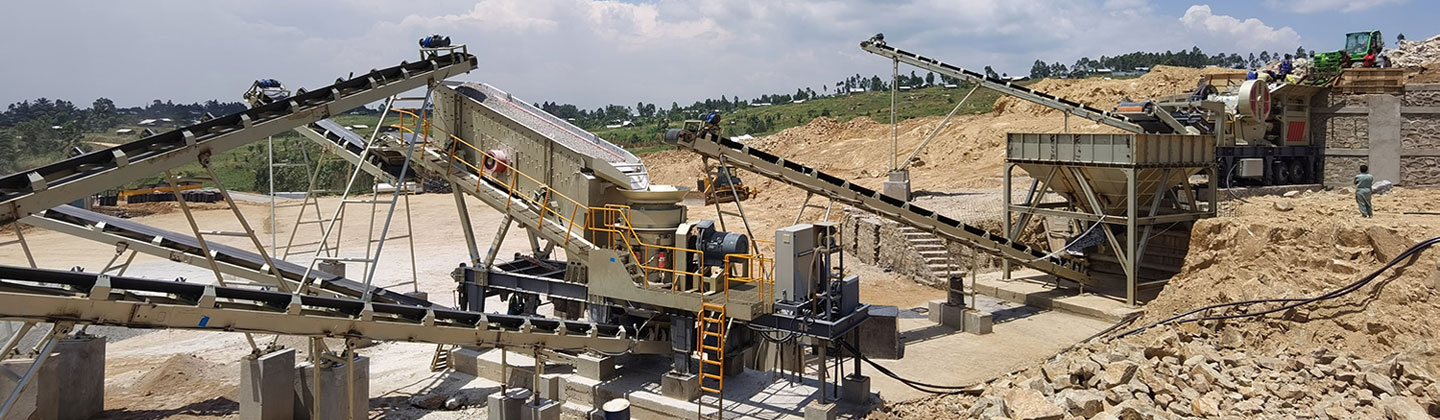
Investing in a limestone crushing plant requires careful financial planning. Whether the project involves producing construction aggregates, road base materials, cement raw materials, or manufactured sand, the total investment depends on equipment configuration, production capacity, material characteristics, and automation requirements.
A complete limestone crushing and screening plant typically includes primary crushing, secondary crushing, screening, conveying, feeding, electrical systems, and supporting infrastructure. Understanding the budgetary prices of these components helps investors select an appropriate production line while avoiding unnecessary equipment costs.
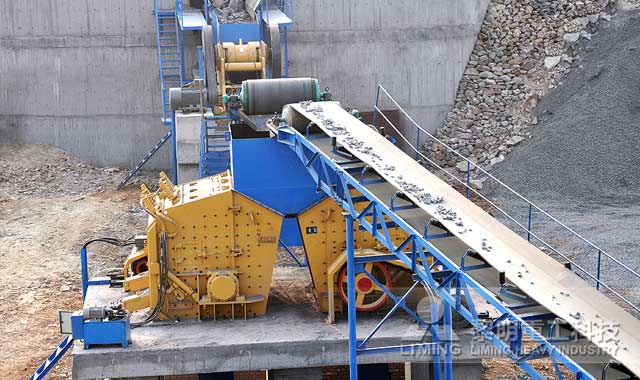
1. Budgetary Prices for Complete Limestone Crushing Plants
The price of a limestone crushing plant varies significantly according to production capacity and configuration. For preliminary investment planning, the following figures provide indicative equipment-budget ranges in US dollars.
| Plant capacity | Typical equipment budget |
|---|---|
| 50–100 TPH | $80,000–$180,000 |
| 100–200 TPH | $150,000–$350,000 |
| 200–300 TPH | $250,000–$550,000 |
| 300–500 TPH | $400,000–$850,000 |
| 500–800 TPH | $700,000–$1,500,000 |
| 800–1,000 TPH | $1,200,000–$2,500,000+ |
These are indicative planning allowances for crushing and screening equipment packages, not guaranteed supplier quotations. Actual prices depend on whether the plant is stationary or mobile, equipment specifications, manufacturer, country of origin, and the scope of supply. Civil works, land acquisition, major utility connections, taxes, and installation may be additional.
For smaller operations, a 100–200 TPH plant may provide a practical balance between investment and production. Large aggregate producers may prefer 300–500 TPH or higher-capacity installations to achieve lower processing costs per ton.
2. Equipment Cost Breakdown
A limestone crushing plant consists of several interconnected systems. Each component contributes to the overall purchase price and determines the plant’s production efficiency.
Primary Crusher: $20,000–$150,000+
The primary crusher receives raw limestone directly from the quarry. Two common choices are jaw crushers and impact crushers.
-
Jaw crushers: Generally cost approximately $20,000–$100,000, depending on feed opening, capacity, and model. They are suitable for large feed sizes and provide reliable primary crushing.
-
Primary impact crushers: Typically cost approximately $40,000–$150,000 or more. They offer high reduction ratios and are particularly suitable for relatively soft to medium-hard limestone.
Jaw crushers are often selected for their robust construction and predictable operation. Primary impact crushers can be attractive when higher reduction ratios and improved particle shape are priorities.
Secondary Crusher: $25,000–$180,000+
Secondary crushing reduces primary crushed limestone to the required aggregate sizes.
-
Impact crushers: Usually cost $25,000–$100,000. They are popular for limestone because they can produce well-shaped particles and a relatively high proportion of fine aggregates.
-
Cone crushers: Generally cost $50,000–$180,000 or more. They are useful for applications requiring controlled product sizing and continuous operation, although their suitability depends on limestone hardness, abrasiveness, and the desired product.
For many conventional limestone aggregate projects, secondary impact crushers offer an economical solution. Cone crushers may be justified where operating conditions or product specifications favor their use.
Screening Equipment: $10,000–$80,000+
Vibrating screens separate crushed limestone into different product sizes, such as 0–5 mm, 5–10 mm, 10–20 mm, and 20–40 mm.
Screen prices depend on deck configuration, screen dimensions, structural design, and processing capacity. Multiple screening stages may be necessary when the plant produces several commercial aggregate grades.
Material Handling Systems: $20,000–$150,000+
Material handling equipment includes vibrating feeders, belt conveyors, transfer chutes, hoppers, and stockpile systems.
These components are essential for maintaining continuous material flow between crushing and screening stages. Conveyor length, belt width, installation height, and structural requirements significantly influence their cost.
Electrical and Control Systems: $10,000–$80,000+
Electrical cabinets, motor controls, sensors, wiring, and automation software coordinate plant operations. Basic systems are less expensive, while centralized control systems with automated monitoring and production adjustments require a higher investment.
3. Five Major Factors Affecting Total Project Cost
The final investment is determined by more than the number of machines. Five technical variables have a particularly strong influence on the equipment selection and overall budget.
1. Raw feed size
The maximum limestone feed size determines the required crusher opening and feeding equipment. Large quarry rocks may require a larger jaw crusher, heavier vibrating feeder, and stronger hopper structure. Additional pre-screening may also be necessary to remove unwanted fines before primary crushing.
2. Required output gradation
The finished product specifications determine the number of crushing stages and screening decks. Producing only 20–40 mm aggregate requires a simpler configuration than producing several grades, such as 0–5 mm, 5–10 mm, 10–20 mm, and 20–40 mm.
More product sizes generally mean additional screening capacity, conveyors, and potentially a closed-circuit crushing system.
3. Target production capacity (TPH)
Higher production targets require larger crushers, wider conveyors, higher-capacity screens, and more powerful motors. However, equipment should be selected according to actual required output rather than maximum theoretical capacity. Adequate operating margins help prevent bottlenecks and unexpected downtime.
4. Limestone moisture content
Wet limestone can stick to conveyor belts, block transfer chutes, and reduce screening efficiency. Materials containing clay or excessive moisture may require grizzly feeders, additional screening, improved chute designs, or washing systems.
These modifications increase initial investment but can improve production reliability.
5. Automation levels
A basic plant with manual controls generally costs less than a fully automated production line. Advanced automation can include centralized control rooms, automatic feeding adjustments, crusher load monitoring, production data collection, and fault alarms.
Although automation increases initial expenditure, it can reduce labor requirements, improve operating consistency, and minimize equipment downtime.
4. Additional Costs to Include in the Project Budget
Equipment purchase prices should not be confused with total installed project costs. Investors should also consider:
-
Civil engineering: Foundations, concrete structures, drainage, and site preparation.
-
Transportation: International shipping, insurance, customs clearance, and inland delivery.
-
Installation: Mechanical assembly, electrical connections, and commissioning.
-
Environmental protection: Dust collectors, water-spraying systems, noise reduction, and wastewater management.
-
Initial spare parts: Crusher liners, jaw plates, screen meshes, and conveyor components.
A contingency allowance of approximately 10–15% of the preliminary project budget is also sensible, subject to site conditions and procurement risks.